

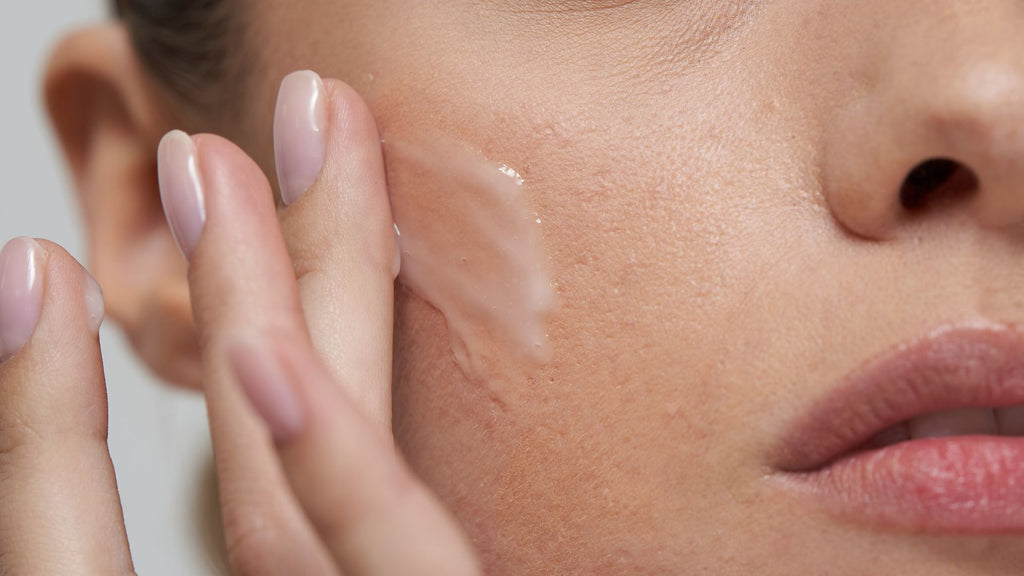
When we find ourselves at buy a cosmetic cream Many factors come into play. Loyalty to the brand, the list of ingredients, its proven effectiveness... so on and so forth! Among the main factors that influence the choice of a facial cosmetic there is certainly its texture.
But how do I find out which one it is better texture for me?
This guide will help you to better orient yourself in the vast world of cosmetic consistencies.

What does “Textures” mean?
Let's start from the term and try to clarify it a little.
The English term Textures means “consistency”: it is a term widely used in cosmetics to define the degree of viscosity, absorbability and creaminess of a product cosmetic, both to the touch and to the application.
Why is this so important?
When we find ourselves purchasing a cosmetic cream, many come into play factors that can influence our final decision.
Some examples? The level of awareness of the brand, the choice of packaging, the list of ingredients, an attractive fragrance: all these factors become fundamental in search for our perfect cream.
But we don't just ask our cosmetic products to be effective or innovative: elements such as the pleasantness to the touch or the ease of absorption they are in fact accomplices to a satisfactory choice. The texture of a cream therefore becomes a fundamental factor.
How do I choose the best texture for my face?
In general we can say that different textures distinguish products intended for consumers with different tastes and needs.
But the choice of the best face cream texture is based on numerous indications, not just personal tastes! Each different consistency is in fact more or less suitable to respond to the specific needs of a particular customer (based on factors such as skin type, age, application times, etc.). It will be important to ask ourselves why we are buying it, when we want to apply it and in general carry out a small analysis of our skin, alone or with the support of a beautician or beauty expert.
Here in this short guide everything we should keep in mind before choosing the best texture for your face.
1. The right texture for my skin type
Every skin type needs to receive the right composition of active ingredients and nutrients designed to balance any skin blemishes (some examples? Dry skin, hyper sensitivity, sebum production...). Know your skin type it's the first step to identify the best texture for us:
Dry skin
Especially in the colder months of the year, our skin will need to be particularly nourished and regenerated. Here it will be indicated to prefer rich textures, which are full-bodied and nutritious, rich in hydrating and revitalizing active ingredients.
Oily or impure skin
Characterized by hyper sebaceous production and prone to bacterial colonization and inflammation, oily skin really needs a dedicated beauty routine. A light or frosty texture will be needed, which does not clog the pores, and which can guarantee hydration while also carrying out an astringent and mattifying action.

Sensitive skin
One creamy but not aggressive texture, highly effective at soothing and protecting against sensations of discomfort, it is ideal for dealing with the excessive sensitivity of our skin.
2. My age
Years pass and things change needs of our skin. If at a young age we only need an initial hydration, moving forward our skin will have to be accompanied in the process of skin aging and the various blemishes involved in it.
Young skin
Under the age of 35 the skin is generally naturally hydrated by the still rich production of hyaluronic acid and collagen in our tissues. So the ideal textures are not particularly rich. They are preferred at this age light textures, sorbets or geloids.
More mature skin
After the age of 40 we witness a slow and natural loss of skin tone and elasticity, caused by the phenomena of photoaging and chrono aging. In this age group they tend to be preferred slightly rich texture, which can revitalize the tissue, making it younger.
Mature skin
After the age of 55, due to the natural phenomenon of skin aging, the tissues will require the use of balms, vegetable butters and particularly nourishing textures which replenish and nourish the skin completely, promoting the production of collagen and elastin and the ability to fight tissue sagging.
3. Moments of application
The time has come to ask yourself: when will I use my cream? In fact, the question changes, since we will decide to apply our cream during the daytime or we will leave it to act during the night.
Day cream application
Generally it is better in this case to prefer one Non-greasy, slow-release texture, which can resist even the hottest hours of the day, without leaving residues. Creams that can be easily applied under make-up and that do not have excessive fragrances are preferred.
Night cream application
Made with richer and more nutritious textures, night creams act during sleep in a deep and effective way. Applying a rich night cream will be a pleasant ritual with which to relax your skin at the end of the working day.
4. The types of textures
There are many types of textures in the world of cosmetics and each type has its own strengths. The time has come to refresh our ideas. Here are the most famous types of textures, can you identify your favourite?
- Cream | It is a product composed of a hydrophilic part and a lipophilic part. The consistency can vary from very light to very rich and can be more or less melting (more or less capable of gliding delicately on the skin, favoring rapid absorption)
- Oil | Nourishing and rich in detox and anti-ox substances, they nourish and hydrate the skin deeply, especially for very delicate or sensitive skin. Proposed in a dry version, they are rapidly absorbed textures
- Serum | Often fluid or semi-fluid product, to be chosen before applying the cream. It has low molecular weight and is rich in active ingredients. Its fluid composition allows it to be easily absorbed by the skin.
- Gels or sorbets | It has a lighter composition than a cream, due to the greater quantity of water inside them. Its application is therefore ideal for the warmer months or in general for all those skin types that do not appreciate too rich textures, which could weigh them down.
- Balsam or Baume | Very dense, rich and nourishing composition particularly suitable for dry skin. Composed mainly of ingredients with thick consistencies such as butters, natural oils and honey.
- Fluid
- Richer than gel-sorbets, in fact, they usually also contain multi-objective filters.

It is clear now that the choice of a facial cosmetic is given both by the set of functional as well as sensorial effects which determine its pleasantness and sensoriality for the individual consumer, guaranteeing its prolonged application over time.
We hope this guide has been helpful in finding the best texture for you.
Do you still have any doubts?
Discover the sensorial techniques to choose the best face cream for you (see the article)


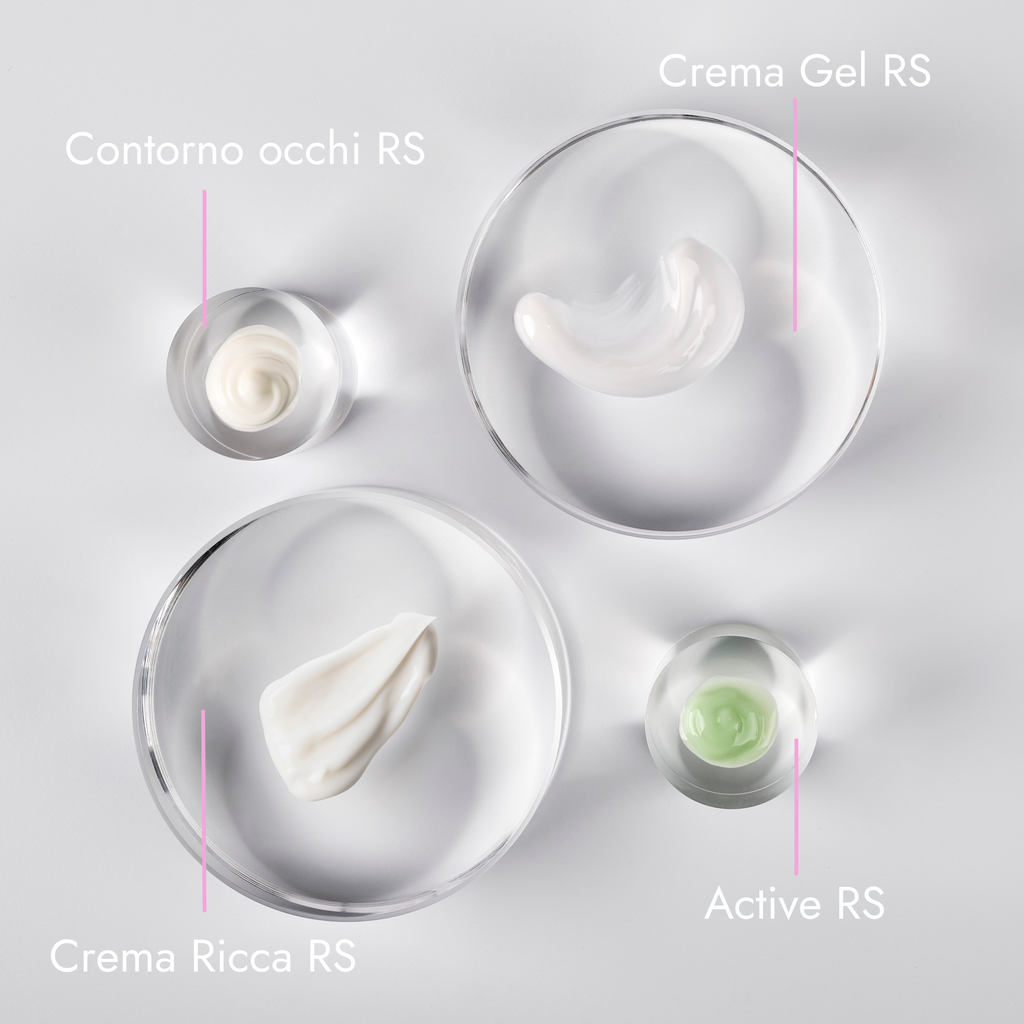
Sensitive
RS Gel Cream
- Regular
- €58,00
- Sale
- €58,00
- Regular
-
- Unit Price
- per


Sensitive
Rich Cream RS
- Regular
- €58,00
- Sale
- €58,00
- Regular
-
- Unit Price
- per


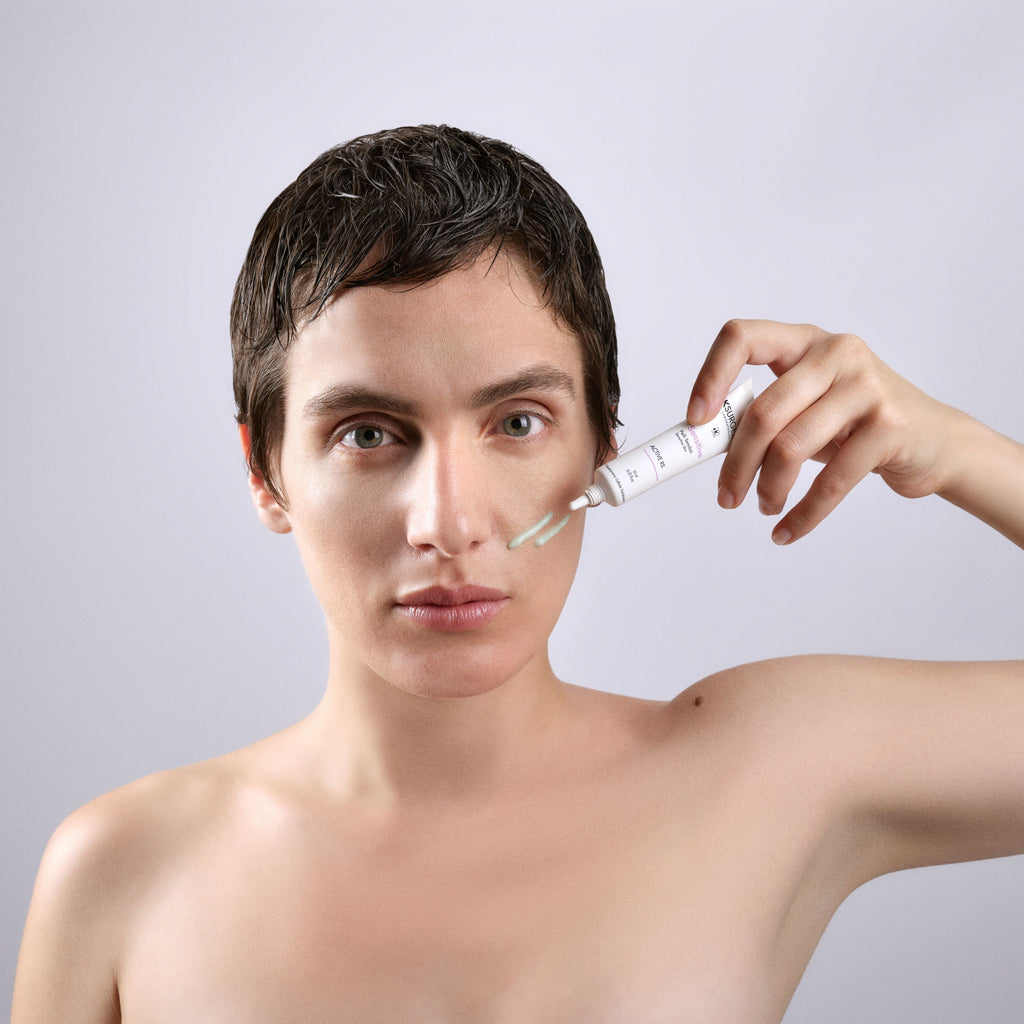
Sensitive
Active RS
- Regular
- €31,00
- Sale
- €31,00
- Regular
-
- Unit Price
- per


Sensitive
RS Soothing Mask
- Regular
- €9,00
- Sale
- €9,00
- Regular
-
- Unit Price
- per