

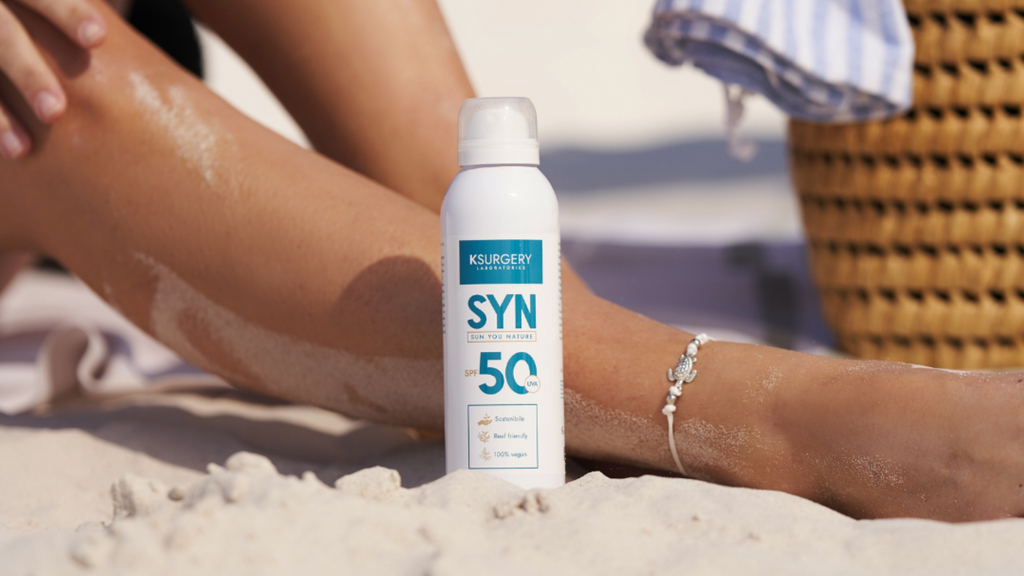
The problem of sunscreen pollution is global. According to the World Tourist Organization every year more 14,000 tons of sunscreen end up in the seas, causing real environmental disasters. The answer lies in the use of eco-sustainable sunscreens, capable of defending our skin and, together, respecting the Oceans.
The problem lies in traditional sunscreens
Many sunscreens are made with ingredients harmful to the environment: chemical filters which, when dispersed in water, damage marine biodiversity.
In May 2018, Hawaii became the first state to ban the sale and use of sunscreens containing chemicals harmful to the oceans thanks to the Hawaii Treaty (Hawaii Reef Bill)

The commitment of cosmetic companies
Many cosmetic companies have taken action and have chosen to offer ocean friendly sun creams. Essential formulations, with eco-sustainable sunscreens, which help protect not only our skin, but also our planet.
Sunscreens that don't pollute the sea: how to recognize them?
In this article we will see together the 5 aspects not to be overlooked when looking for eco-sustainable solar products so as to guide you in your purchases before the summer holidays
-
Choose eco-sustainable sunscreens
What are the substances and products that have the greatest impact on the marine environment?
Sunscreens are mainly blamed, and the active substances contained within. We are referring in particular to three substances: oxybenzone, octinoxate and octocrylene.
Due to their hydrophobic nature, these substances they quickly settled on surfaces at the bottom of the sea, encountering not only sandy seabeds but numerous marine organisms, first of all corals.
The first step will therefore be to choose sunscreen without oxybenzone, but with latest generation complementary filters capable of giving maximum protection.

-
Choose reef friendly sunscreen
Always check that the solar lights are always on Reef friendly certified. What does it mean?
A reef safe, or reef friendly, sunscreen is one sun cream made with components that are not harmful to the marine ecosystem.
In particular, the Reef friendly products are:
- Free from ingredients harmful to coral reefs
- Free from preservatives and additives including parabens, phthalates and triclosan
- Free of nanomaterials
- Water resistant
-
Eco-sustainable sunscreens and sunscreens
Choose a product that is not only certified reef friendly, but also attentive to environmental sustainability issues. Here are some pointers
- Water resistant
- Sustainable packaging
- Eco-friendly production

-
Vegan sunscreen
Choose for your skin vegan sunscreen.
The best companies offer cosmetics without any trace of ingredients of animal origin, honey and beeswax included. Likewise, choose products not tested on animals.
-
Water resistant sunscreens
To allow the filters not to dissolve in the sea, it is essential that the sunscreens are highly sustainable water resistant. Water-resistant sunscreens they stay on the skin longer, continue to protect after a bath and do not disperse in water


Sensitive
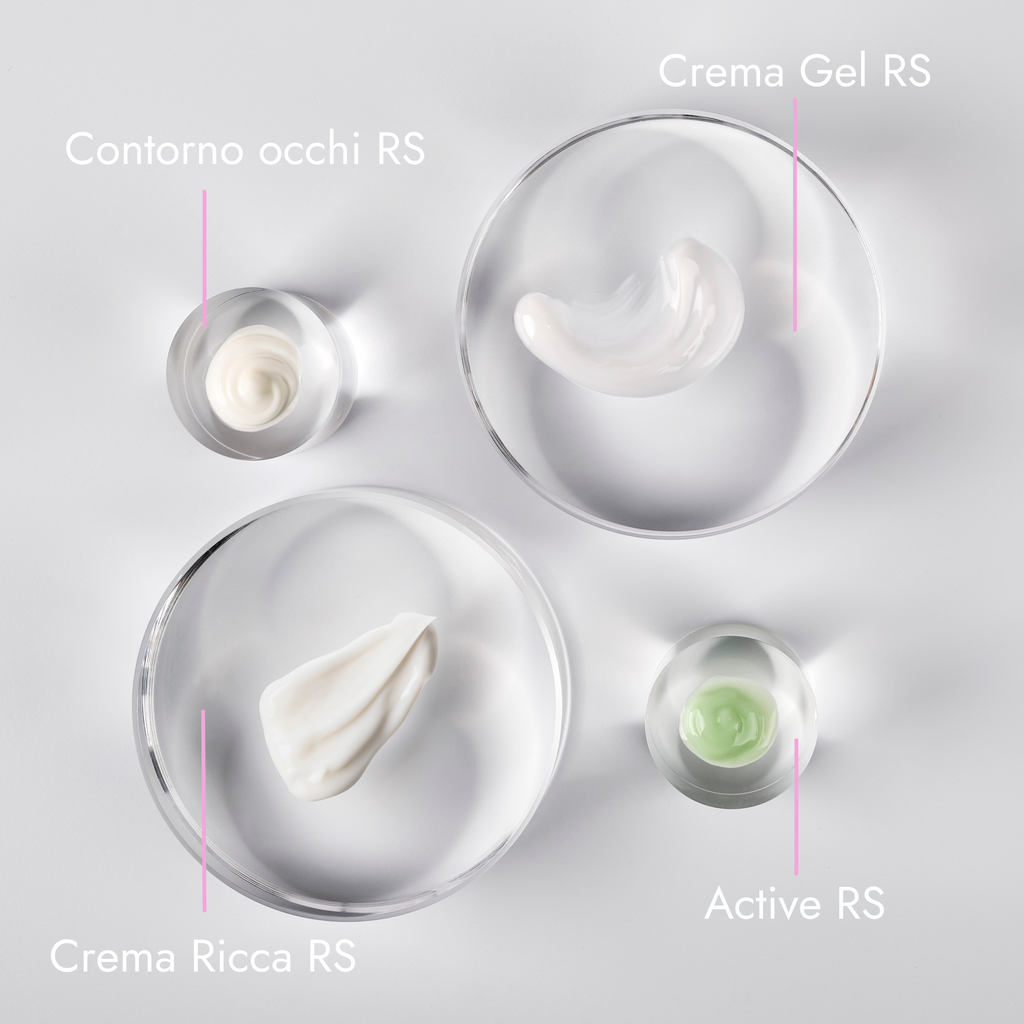
RS Gel Cream
- Regular
- €58,00
- Sale
- €58,00
- Regular
-
- Unit Price
- per


Sensitive
Rich Cream RS
- Regular
- €58,00
- Sale
- €58,00
- Regular
-
- Unit Price
- per



Sensitive
Active RS
- Regular
- €31,00
- Sale
- €31,00
- Regular
-
- Unit Price
- per



Sensitive
RS Soothing Mask
- Regular
- €9,00
- Sale
- €9,00
- Regular
-
- Unit Price
- per